· IT DEV · 6 min read
Google's New Search Bar and What It Changes for SEO in 2026
At Google I/O 2026, Google announced the most significant change to the search interface in 25 years. Click-through rates dropped from 27% to 11%. What does this mean for your business and your SEO strategy?
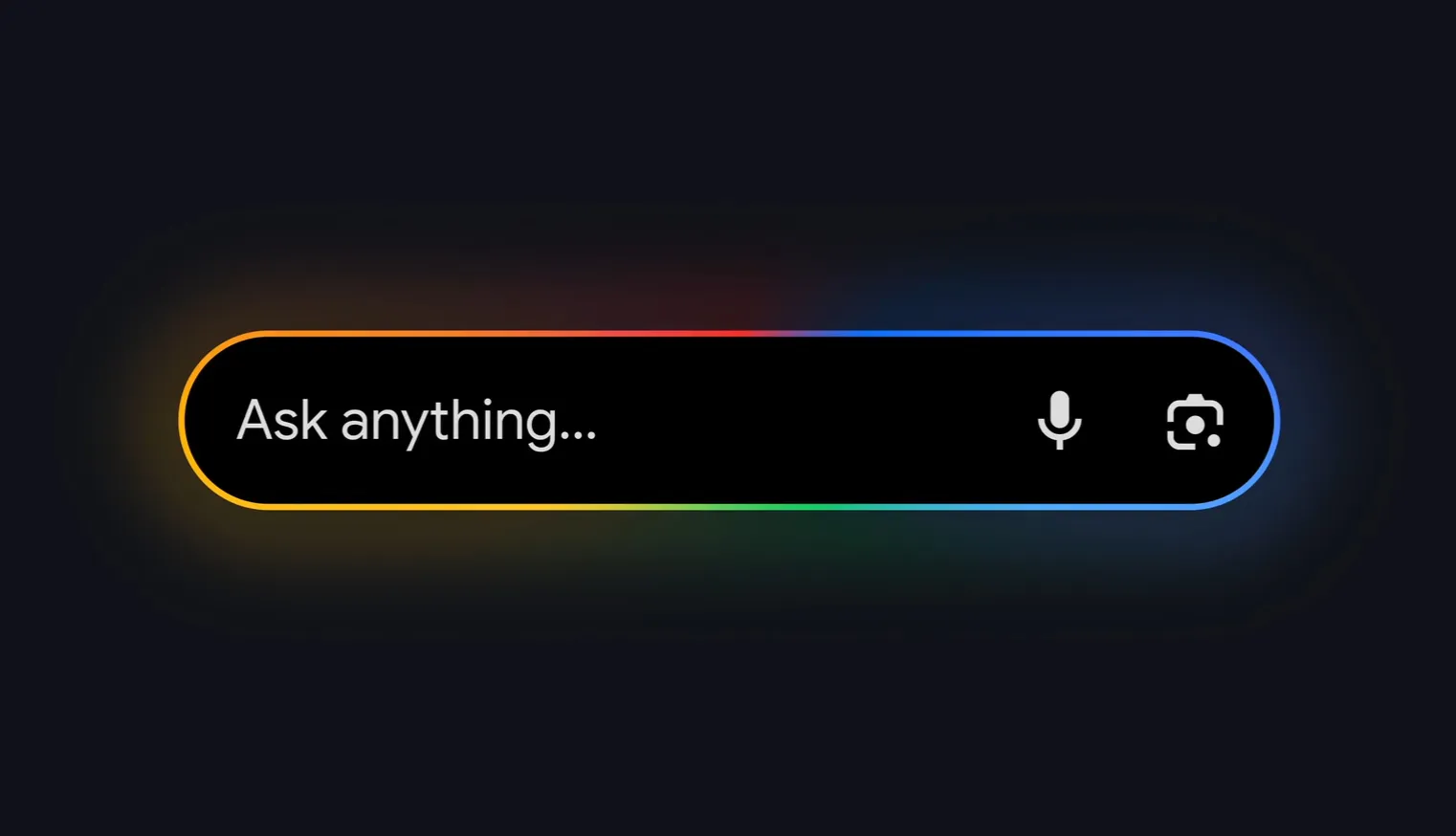
On May 19, 2026, during Google I/O, Google’s Head of Search Elizabeth Reid described what she called “AI search through and through.” The search bar — which had remained virtually unchanged since the company’s founding — underwent a radical transformation. And with it, the entire SEO game changed.
The data is already there: click-through rates for the first search position dropped from 27% to 11% on queries with AI Overview (SISTRIX, March 2026). AI Overviews now appear on 48% of all Google searches, up from 34.5% in December 2025.
If you have a website, this article directly concerns you.
What Google Actually Changed
The new search bar is not just a visual update. It is multimodal — users can submit text, photos, and video in the same query. Behind everything runs Gemini 3.5 Flash, which generates synthesized answers for billions of queries daily.
The critical change is not technological. It is structural: the list of blue links is no longer the default result — it is the last resort.
An Example That Says It All
A user searches for “best accountant for small business in Athens.” Previously, they would get 10 results and click on 2–3. Now Google answers immediately: “For small businesses in Athens, it’s worth considering… [AI synthesis].” The click to your website never happens. You never receive the traffic. Google keeps the user inside its own ecosystem.
The Traffic Decline: What the Data Shows
The Q1 2026 State of Search report (Datos & SparkToro) found that zero-click searches reached 22.4% in March 2026. But the real problem lies elsewhere:
The typical Search Console picture today:
- Impressions: +12% month over month
- Clicks: −38%
- Rankings: unchanged
Your page still ranks first. Google displays it as usual. But an AI summary “solves” the query before anyone clicks. You are winning the ranking game on a board where winning the ranking no longer determines revenue.
Furthermore, only 14% of URLs appearing in AI Mode citations overlap with those in AI Overview citations. Ranking well in one AI surface does not guarantee visibility in the other — they function as separate targets.
Information Agents: The Next Step
Beyond the new search bar, Google previewed information agents — autonomous tools that continue working after the search. The example from I/O: a user searches for a flight above their budget. They activate an agent. They receive a notification when the price drops — without ever visiting a travel site.
For e-commerce and transactional websites, the risk is obvious: an agent that compares prices, checks availability, and initiates checkout without the user ever visiting your store. This is not a future scenario — it has been scheduled for rollout in summer 2026.
GEO, AEO, SEO: What Google Officially Says
On May 15, 2026, four days before I/O, Google published an official optimization guide for AI features. The key statement:
AI Overviews and AI Mode retrieve content from the same index as traditional search, through retrieval-augmented generation (RAG). GEO and AEO are not separate disciplines — they are SEO applied in an AI environment.
What Google says to ignore:
llms.txtfiles: treated as any text file, not as a ranking signal- Content chunking: AI systems extract the relevant snippet on their own
- Special schema exclusively for AI: not required
- Inauthentic mention campaigns: subject to the same spam detection as traditional link schemes
Research by Princeton and Georgia Tech (ACM KDD 2024) confirms this: the characteristics associated with citation in AI responses — authoritative sources, quantitative evidence, clear structure — do not differ from those that boost a page in traditional results. Pages around the 5th position saw a 115% increase in visibility in AI responses when they added proper citations.
Ranking vs. Citation: The Difference That Changes Everything
Recent data from Brandlight shows that the overlap between top organic results and pages cited by AI systems dropped from 70% to below 20%.
| Traditional SEO | AI Citation | |
|---|---|---|
| Goal | First position for “X keyword” | Be the source that Gemini cites |
| Success | High impressions, 25% CTR | AI says “according to [your brand]“ |
| Measurement | Clicks, rankings | Citation frequency, brand mentions in AI |
| What is rewarded | Discoverability, relevance | Confidence, attribution safety, extractability |
A page can rank first and be invisible in AI Mode. A page on the second page of results can be consistently cited by Gemini, ChatGPT, and Perplexity.
What Changes for Each Type of Business
Local businesses
Transactional intent — someone looking for a plumber, accountant, or dentist — still drives click behavior that AI does not fully replace. However, your presence on Google Business Profile, NAP consistency, and reviews become even more critical — because AI systems characterize brands using these signals before generating a response.
E-commerce
The short-term risk is moderate. The long-term risk, with information agents launching agentic commerce in summer 2026, is structural. It is worth investing now in direct customer relationships (email lists, loyalty programs) independent of Google traffic.
B2B & services
Thought leadership content and original data have already become the most resilient asset. If you publish something that an AI cannot reproduce from general knowledge — primary research, real case studies, expert commentary — it gets cited. If you publish a “Top 10 reasons to do X,” it gets replaced.
Publishers and blogs
This is the most difficult category. Revenue depends on page views. AI Mode is by design an environment with fewer clicks. The practical answer: subscriptions, branded traffic, and building a direct relationship with your audience that is not mediated by Google.
What You Need to Do Now
Google’s official guide confirms that GEO does not require a separate technical stack. But that does not mean the work is the same — it means the threshold for adequate SEO has risen.
The question you need to apply to every page:
Does this page contain something that an AI would need to cite rather than paraphrase?
If the answer is no, the page is vulnerable. Generic explainers, keyword-dense guides, rewritten summaries are not citation candidates. Original research, proprietary data, expert voices, primary reporting, results from real tests — those are.
Practical actions:
Entity layer: Make sure your brand is consistent across Wikipedia, Google Business Profile, structured data, and authoritative third-party references. AI systems characterize brands using these sources.
Citation-ready content: Add statistics with sources, client results with numbers, original positions that cannot be found elsewhere.
Technical foundations: Make sure AI crawlers (GPTBot, ClaudeBot, Googlebot) have access. Check your robots.txt.
New metrics: Track citation frequency on AI platforms (ChatGPT, Perplexity, Gemini) — not just rankings and clicks.
Structured data: Article schema, FAQ schema, Organization schema remain important for AI indexing.
The Real Change
Beneath all the technical details, there is a single structural shift:
For 30 years, the contract between users and search engines was exploratory. You typed a few words. Google gave you a map. You navigated. Websites existed because that journey required stops.
Now users do not search to explore. They search to delegate. Give me the answer. Tell me which one. Make the booking.
This shift changes what visibility means. Visibility once meant appearing on a list. Visibility now means being the source that an AI trusts enough to speak through.
The question for 2026 is not “how do I rank higher?” It is:
What do I know, or have tested, or can prove, that an AI would need to borrow from me?
That answer is the only resilient asset in the new search landscape.